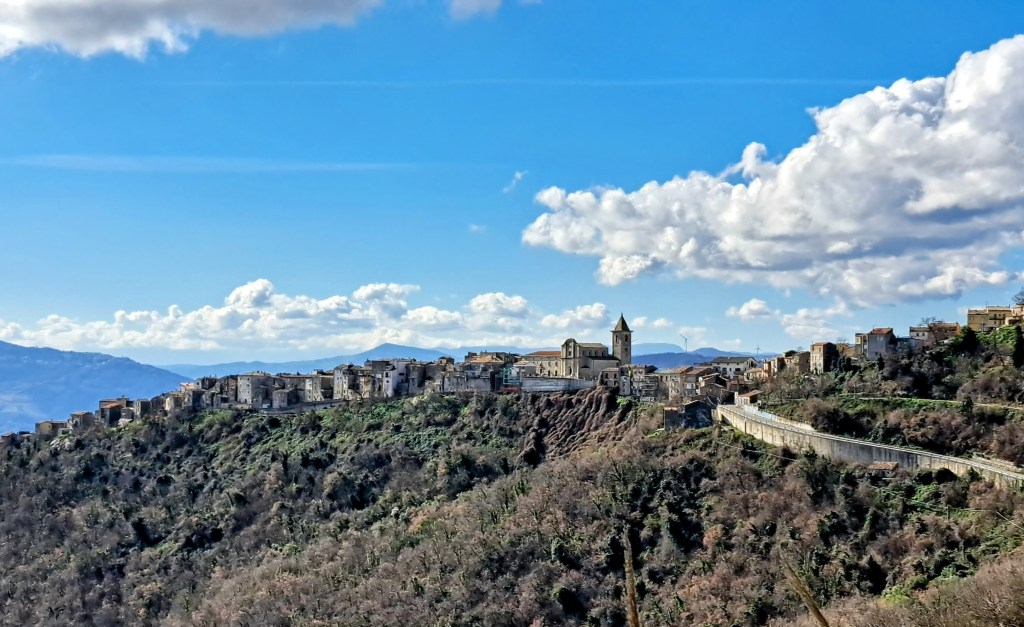
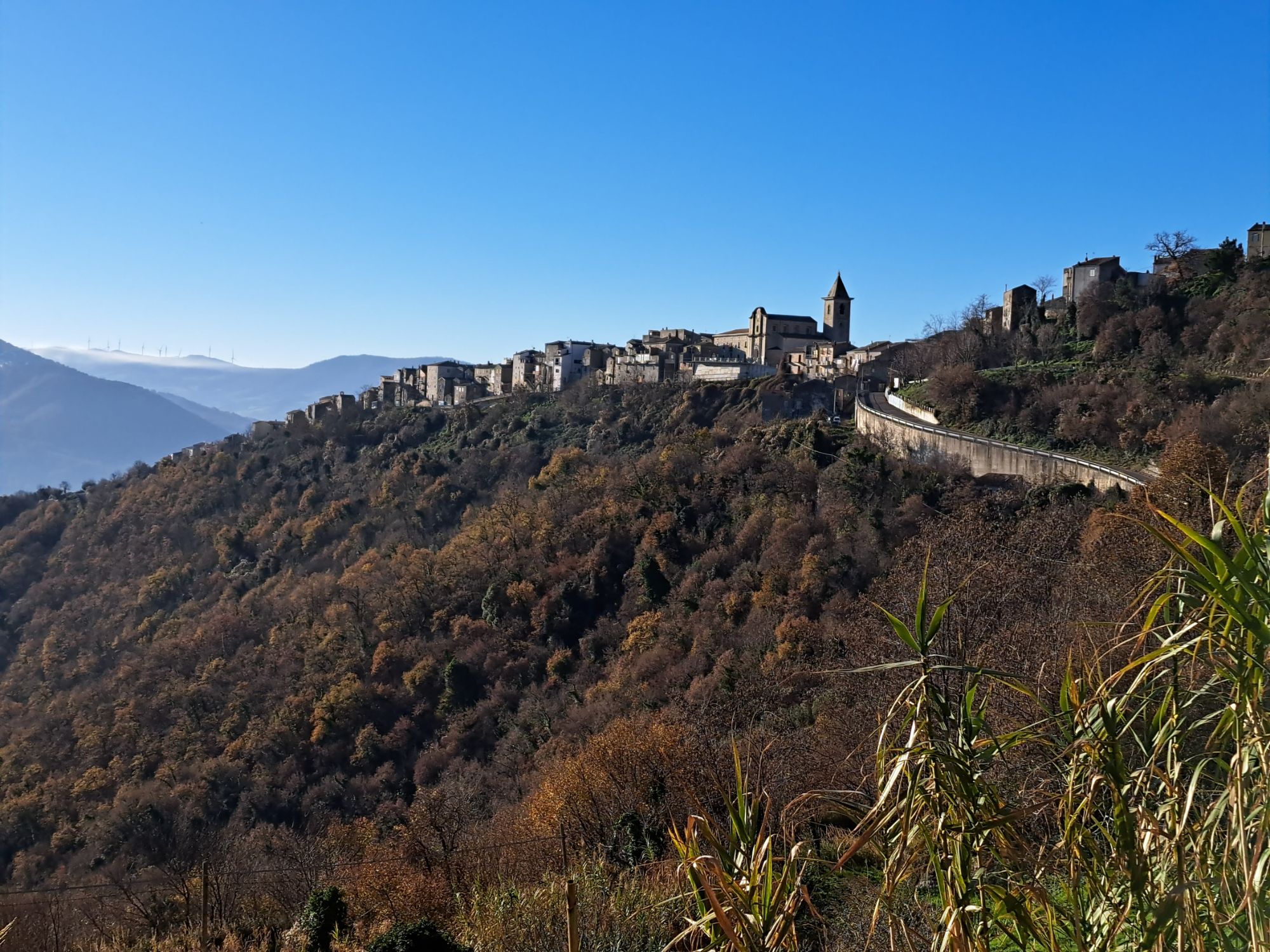
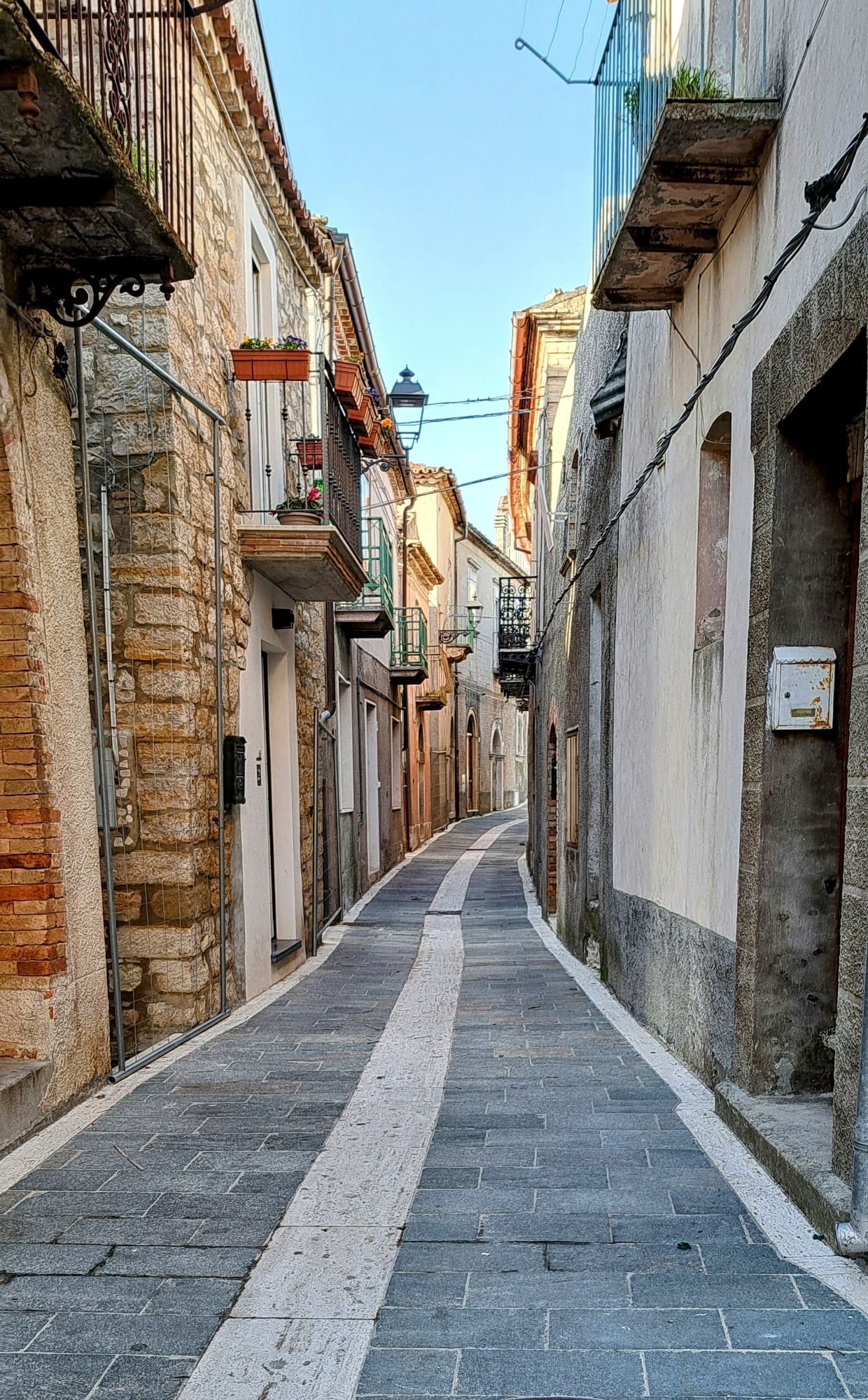
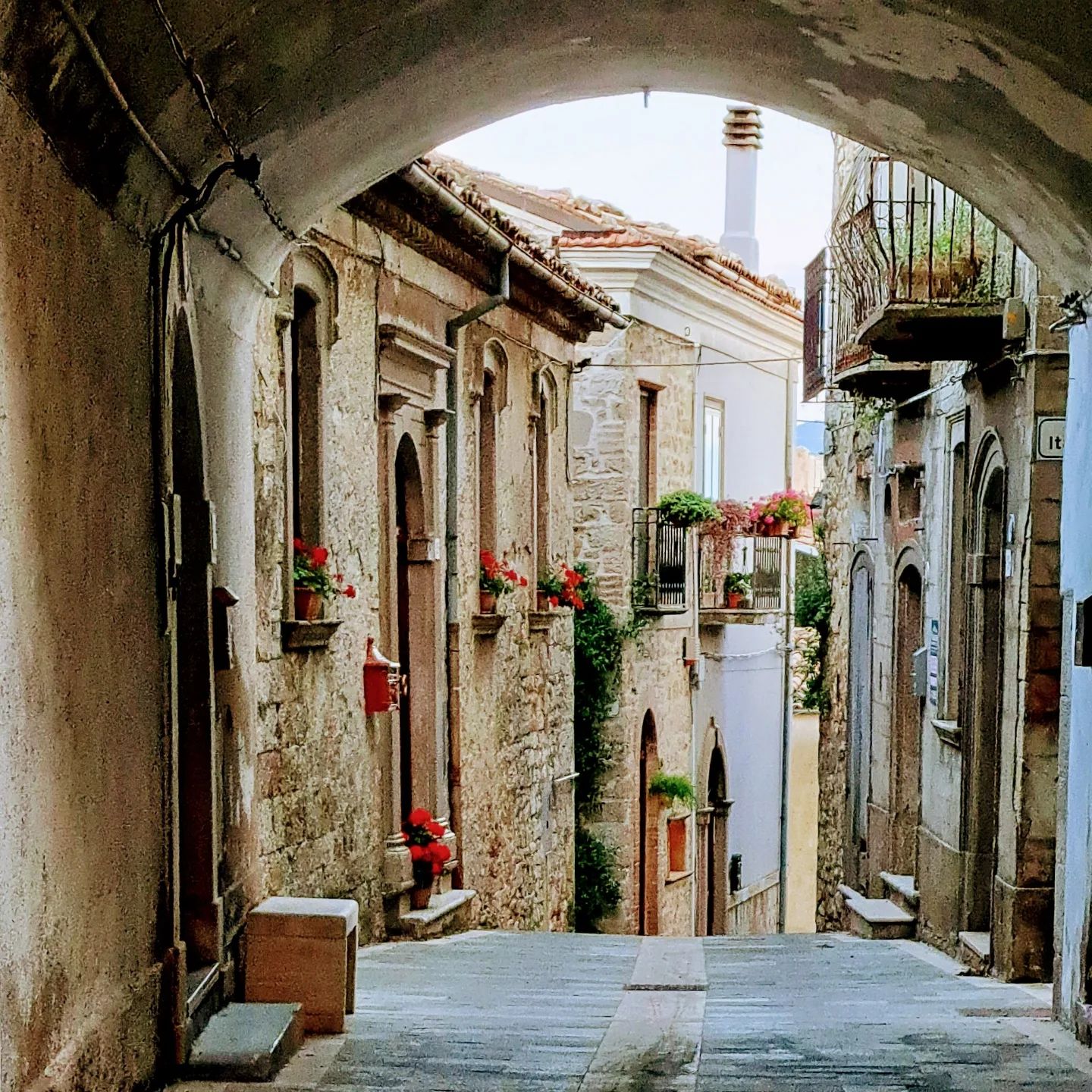
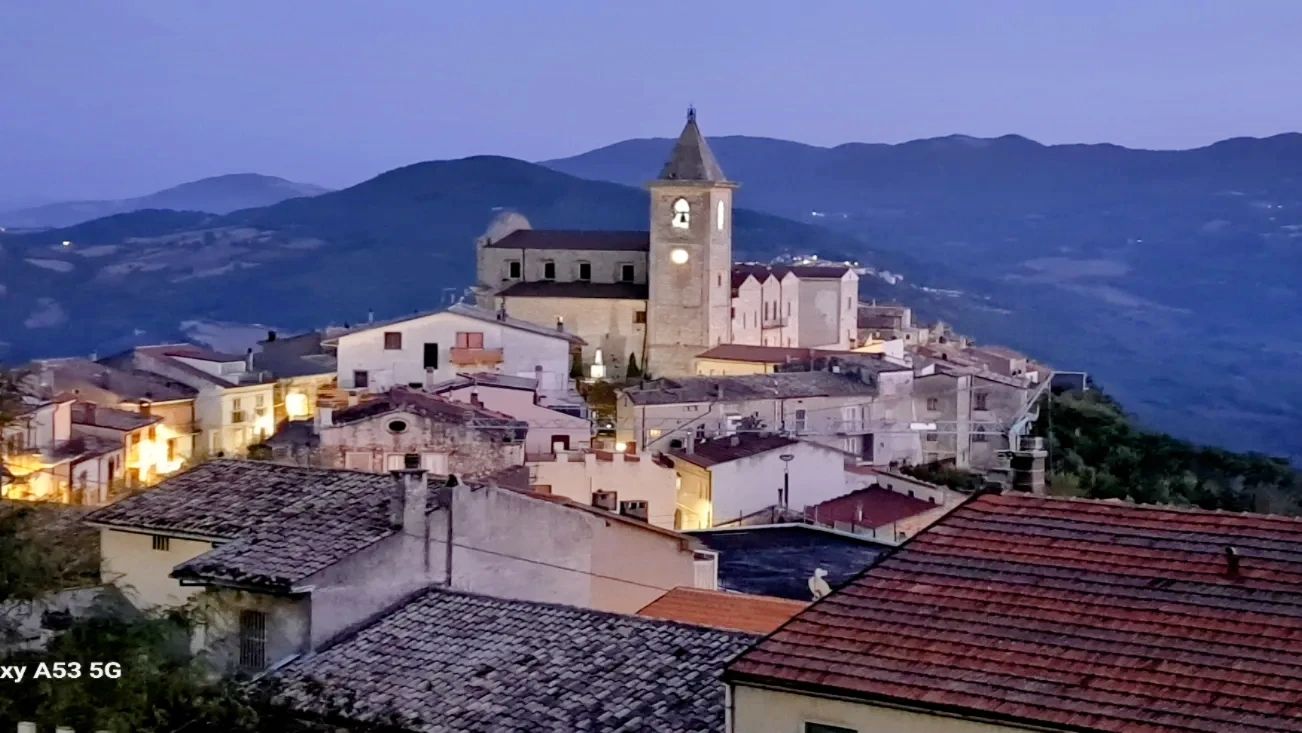
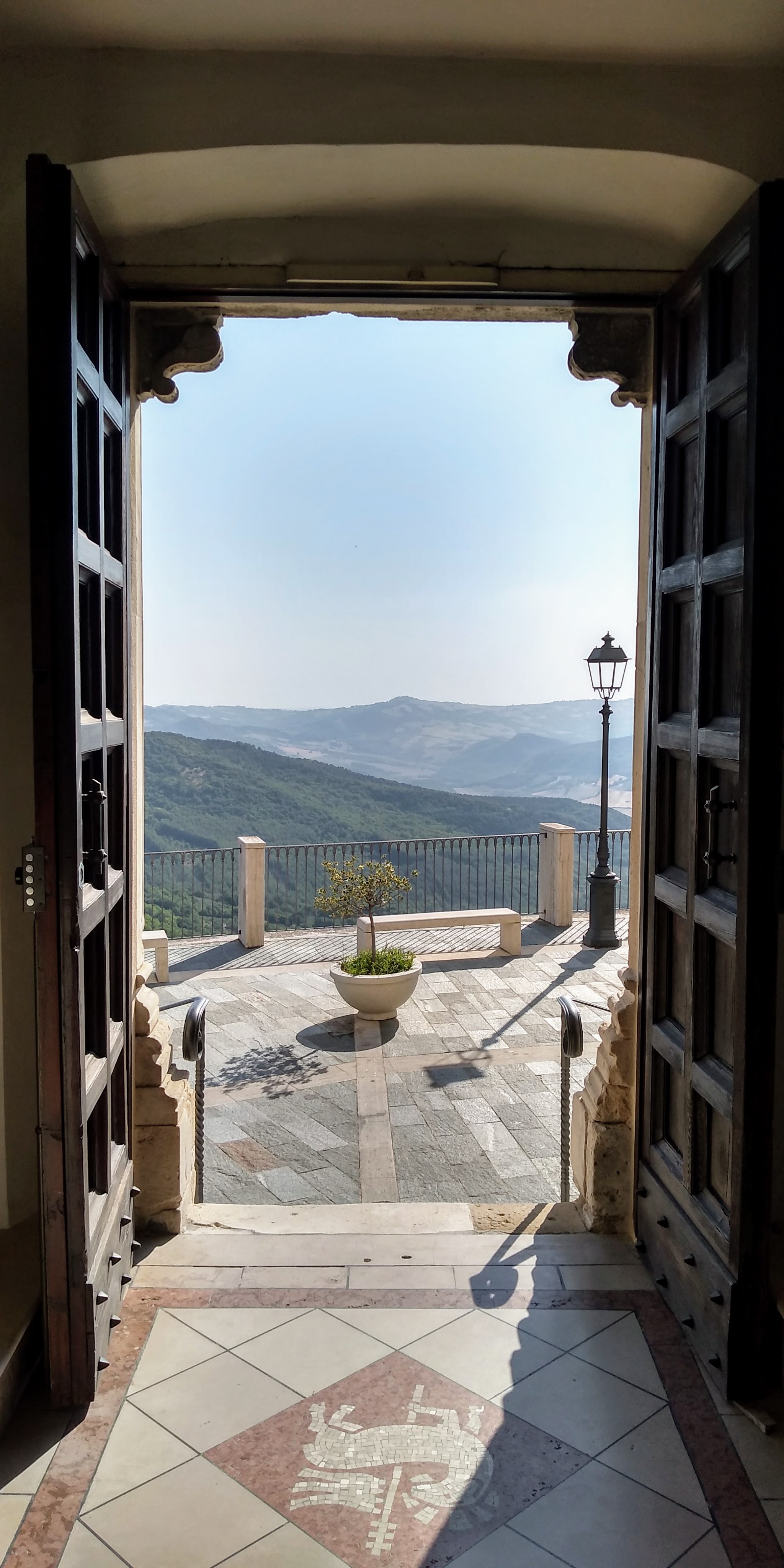
In the fall of 2022, we made the decision to move closer to my cousins, in San Salvo, and the sea. We also realized that we needed a home with less maintenance (no large tract of land) in a small village with amenities available by foot. We found our perfect match here in Tufillo. The folks here have welcomed us into their small community, and we are very happy, indeed. The views are gorgeous and living in ‘centro storico’ is a joy.
History Legend has it that an invasion of ants caused the inhabitants to move from Monte Farano (705 m above sea level) to a lower site. The current town expanded starting from the 12th-13th century and currently retains elements from the period. Archaeological excavations on Monte Farano have brought to light ceramics from a period ranging from the 6th to the 2nd century BC. and a couple of rooms in opus signinum of a building from the 2nd century BC. Also on Monte Farano, a bronze votive key from the 4th century BC was found. with an Oscan inscription dedicated to the goddess Venus and preserved in the National Archaeological Museum of Chieti.[4]
Fortified village The first structure dates back to before the 15th century with an extension towards the extra moenia church of San Vito in a period after the 15th-16th century. The settlement on the ridge has a thin and elongated shape with the comb-like buildings on an axis with a north-west/south-east orientation. The market, the hospital with the adjoining church of Sant’Antonio and the public fountain are located to the north. The city walls ended near a sub-portico identified with the Porta da Piedi.[6]
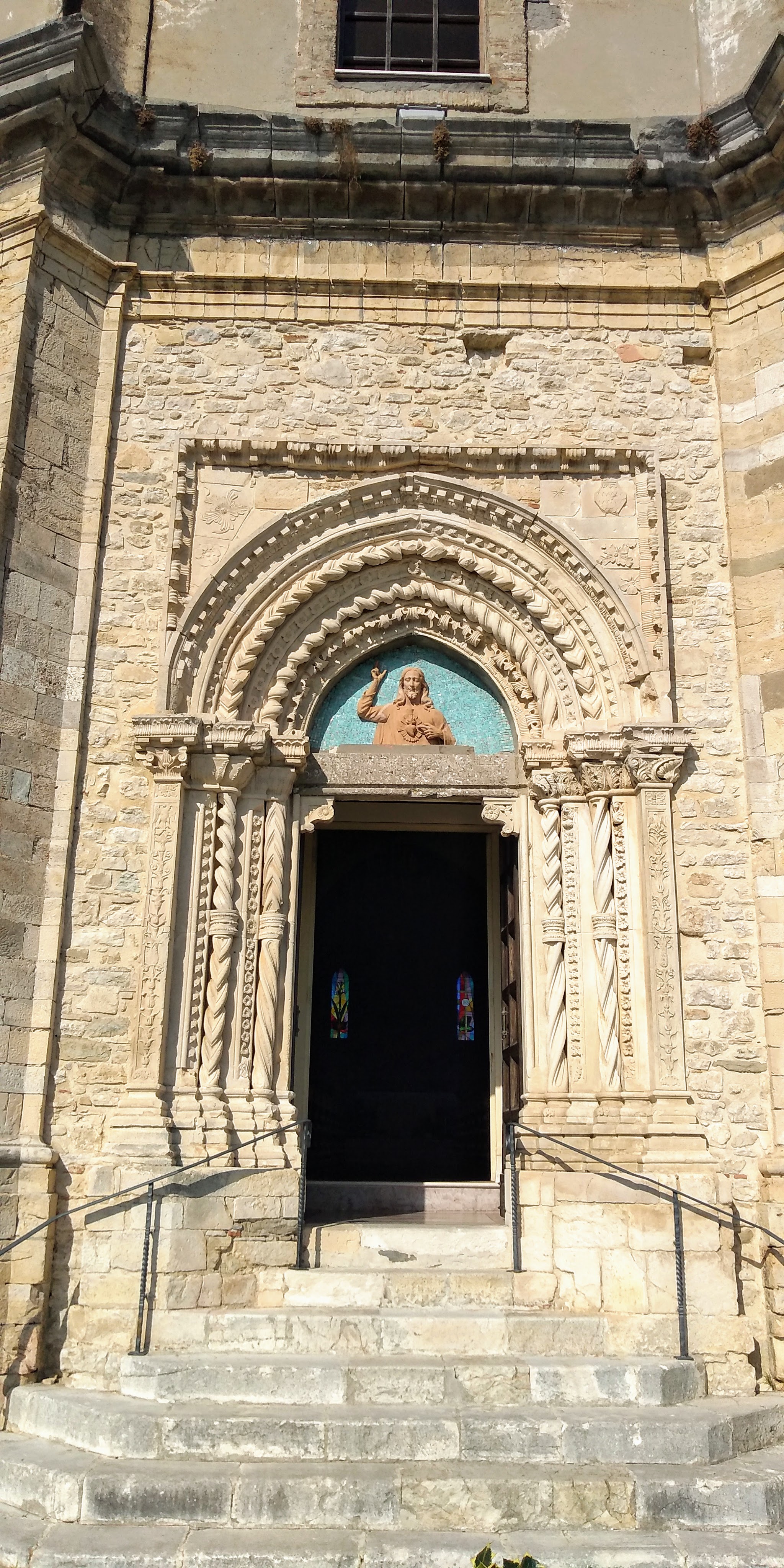
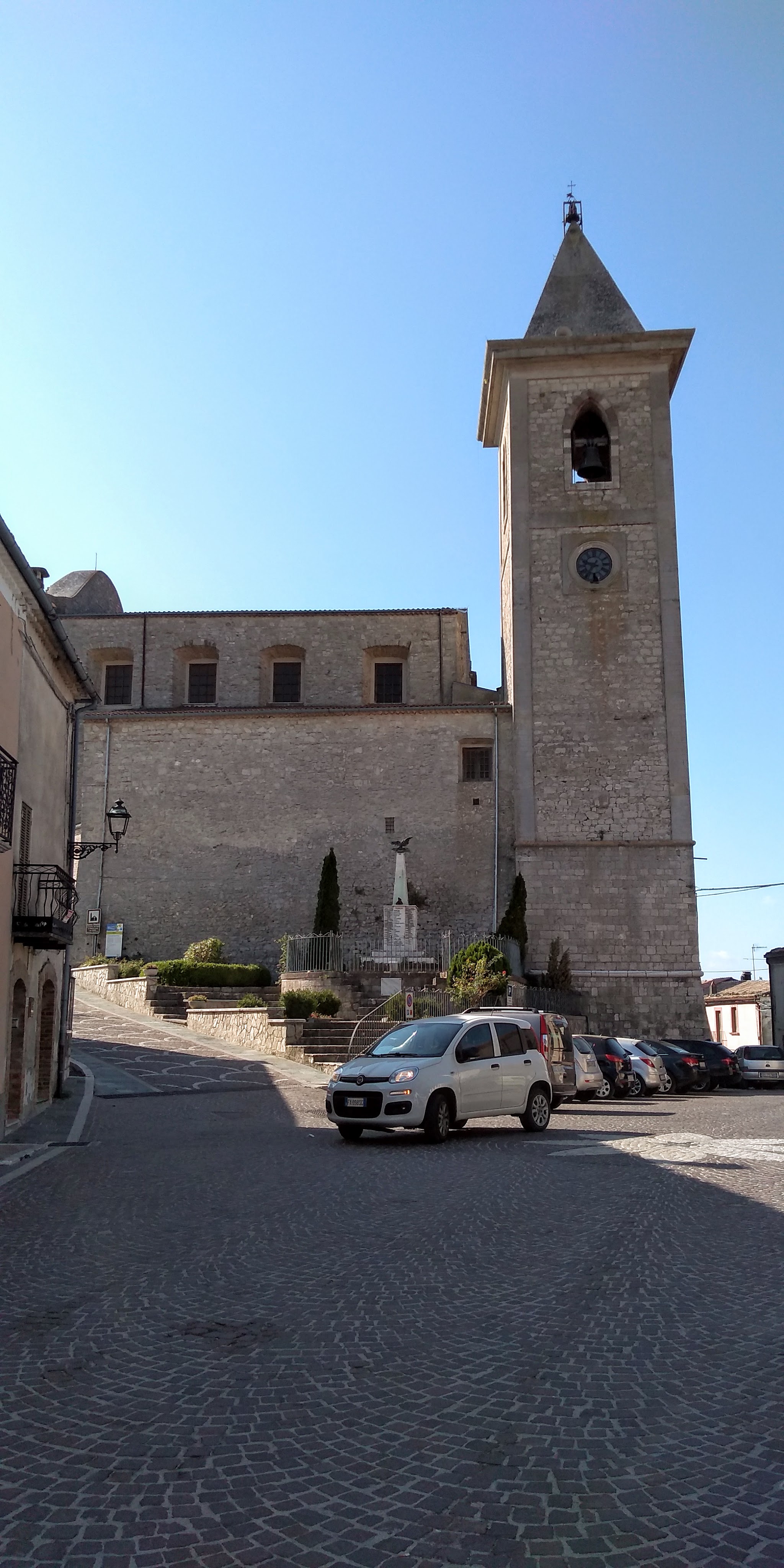
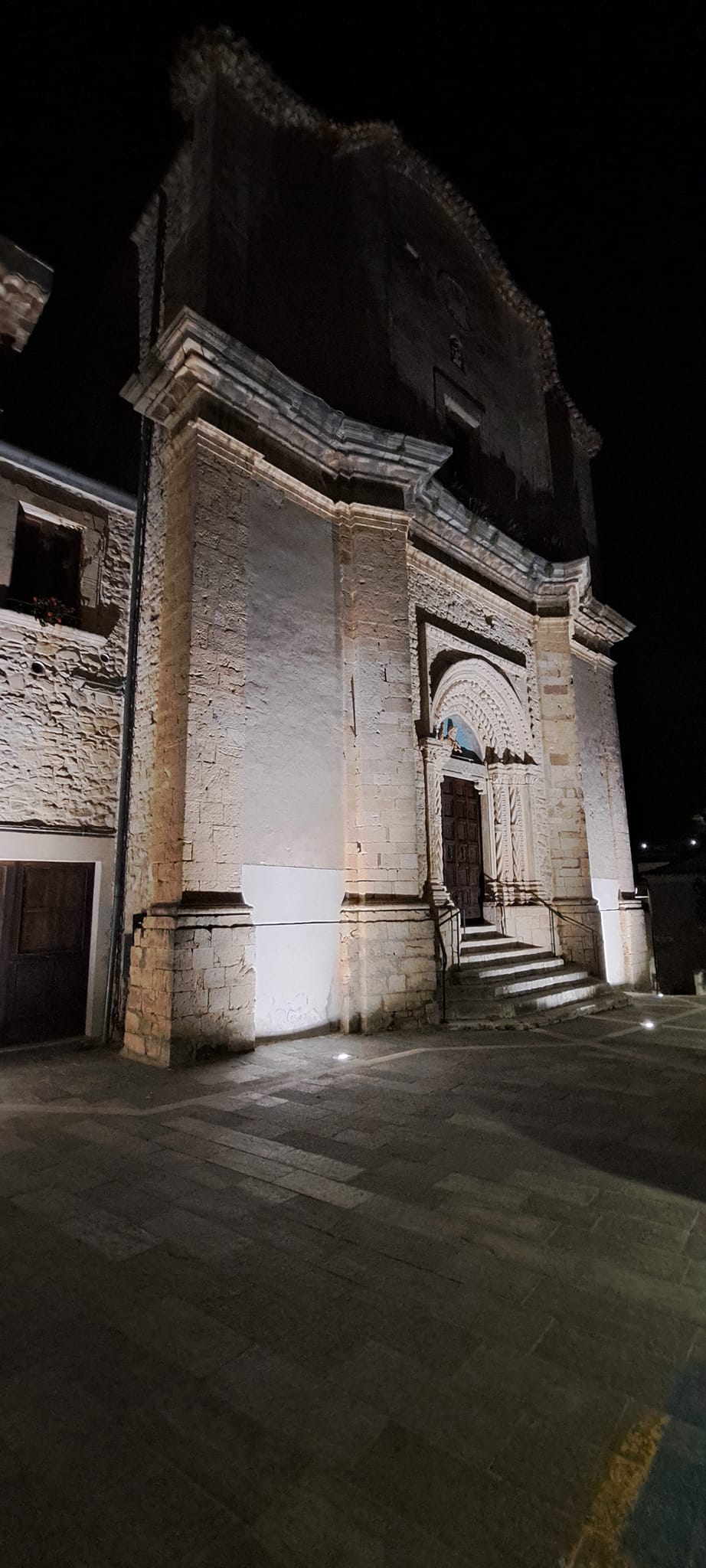
Church of Santa Giusta It is located in Piazza Marconi. It was built before the 16th century, with subsequent transformations in the 18th century. The church is located at the highest point of the village near the Porta da Capo and the market square also known as Largo Outside the Door. The façade consists of a curved pediment placed in the upper crown. The central area is delimited by pilasters and two wings. A cornice divides the facade into two registers. The portal, completely restored by the sculptor Felice Giuliante after the Second World War, is made of stone carved in late Gothic style with Renaissance elements in the side pilasters. The interior has three naves.[7] The bell tower has a square plan and consists of a pyramidal spire.[8] The church has been recognized as an Italian national monument.
Chiesa Di San Vito
The patron saint of Tufillo is St. Vitus who is celebrated on June 15th. Since 1568 a church had been dedicated to St. Vitus located in the lower part of the village. The devotion of the Tufillesi to San Vito is perhaps due to the apostolic influence exercised in the area by the Cistercian monks of the Abbey of San Vito and Salvo, which existed since 1247 at the mouth of the Trigno river.
Archaeological exhibition looking for Herentas It is located in via Sant’Antonio Abate. It was set up in 2006. The exhibition consists of finds found in Monte Farano including a bronze key with an Oscan inscription dedicated to the goddess Herentas, an Italic deity identifiable with Aphrodite. Other research has brought to light the remains of huts from the beginning of the Iron Age and a center perhaps founded around a Herentas temple which was inhabited from the 5th to the 2nd century BC.[10]
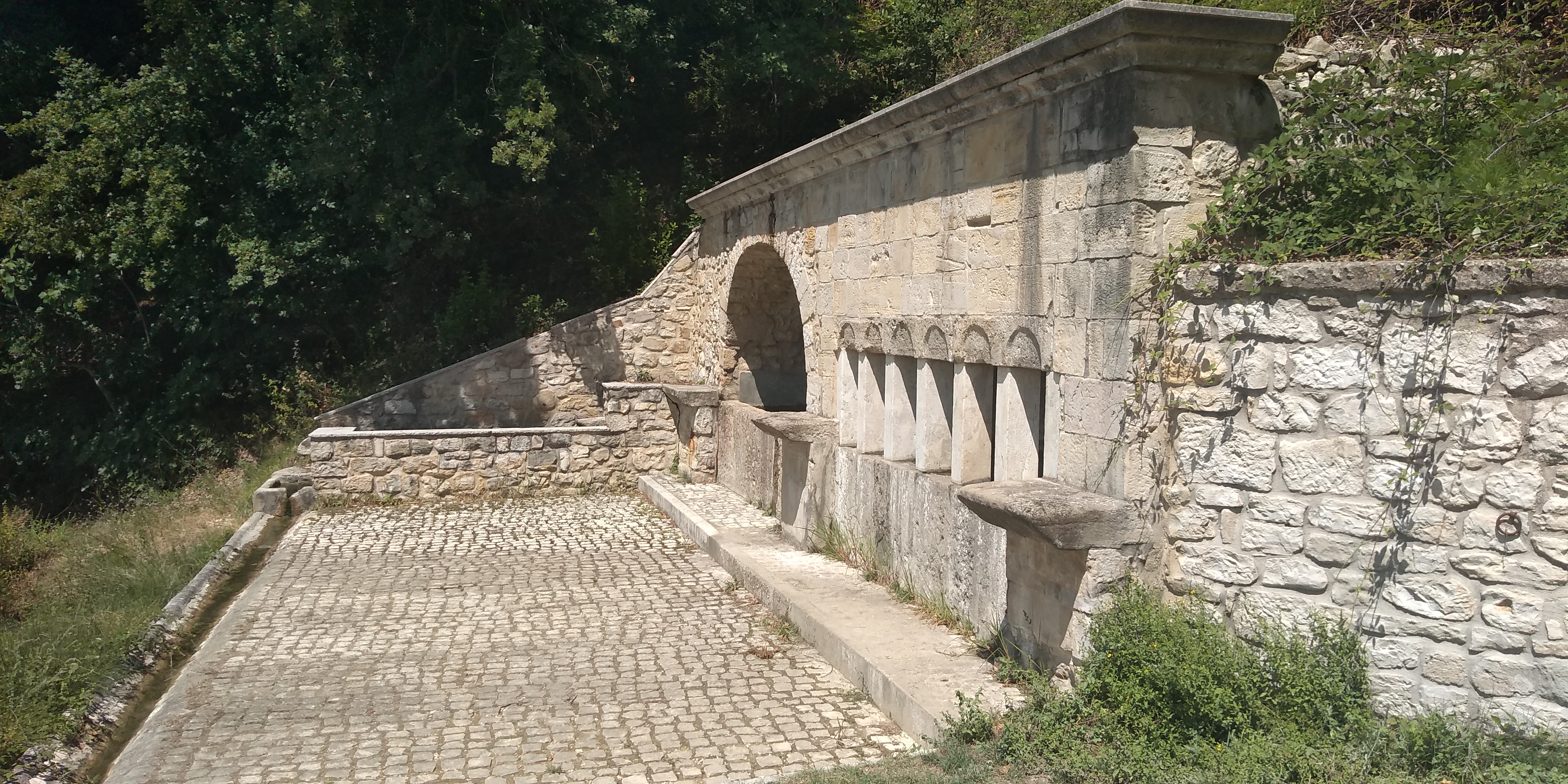
La Fonte Grande The Fonte Grande, which has been restored to its former glory thanks to the latest works carried out in 2008, is of the wall type with recessed niches, with a horizontal termination underlined by a simple frame. The wall, made of regular ashlars of limestone, is punctuated by three semi-pillars with an upper projecting shelf that delimit two distinct areas: one intended for the Fountain, located on the left; the other at the trough, located on the right. Simple aligned slabs of stone form the two basins. Recent works have brought to light the holes on the façade; Their occlusion has allowed a good preservation over time and has given greater staticity to the artifact, but has prevented it from being immediately read for a long time. With the latest works, the arch that frames the fountain and which in depth serves as a cover of the basin has been rediscovered and the six openings have been reopened, terminated at the top by arches just in relief, which characterize the trough. The date 1751 or 1761 of its construction or probable restoration is engraved on a stone ashlar. In 1816, however, there is news of a restoration or reconstruction by the master builder Carlo Di Fonzo. (Tufillo.altervista.org)
Bassano Marquis Palace The Bassano palace dates back to the eighteenth century, now the seat of the municipality, it was built in the eighteenth century by the Bassano di Tufillo marquises.

 Navigating Life in Abruzzo